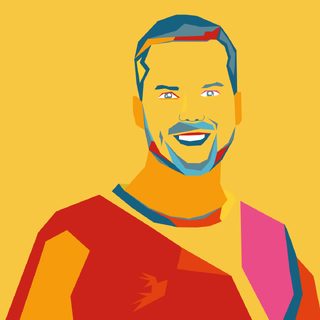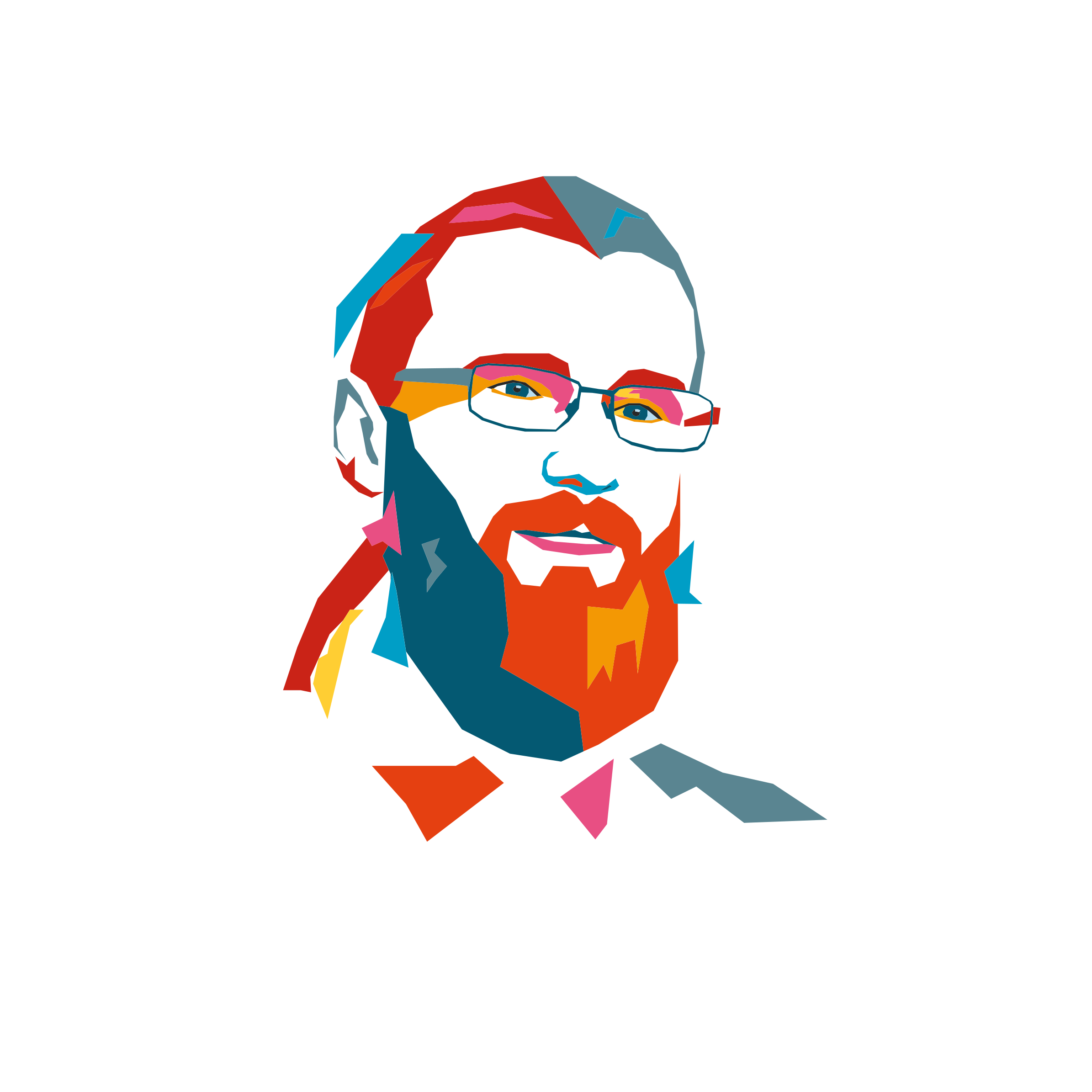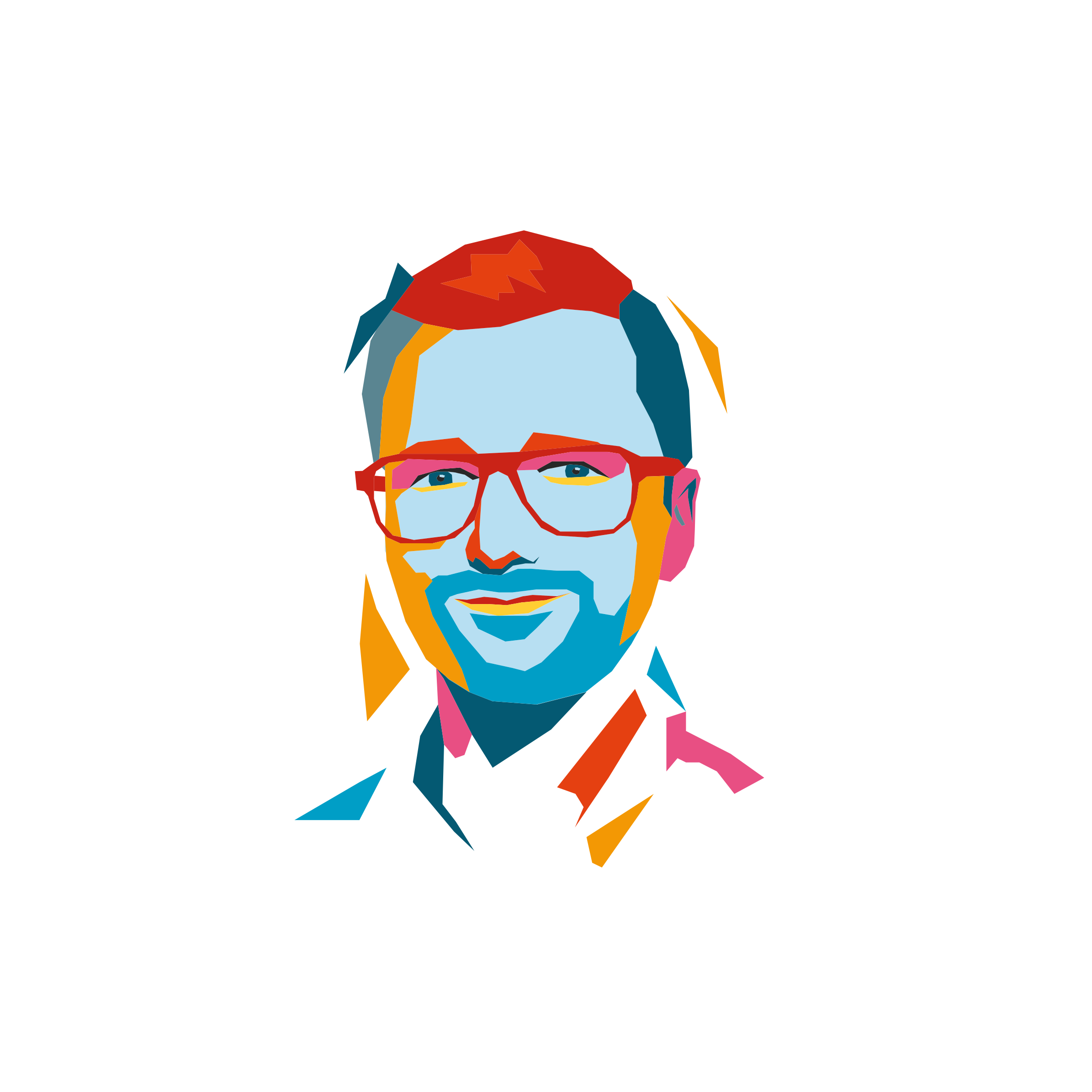
Allow us to introduce De Long Iu, also known as the “German Dragon” on the Zammad team. He is our consultant, and in this interview, he shares why remote work has pleasantly surprised him, what good workshops have to do with managing expectations, why Zammad AI doesn’t need utopian promises, and how river surfing and volunteer work shape his free time.
What is your name and position at Zammad?
My name is De Long Iu, and I work as a consultant at Zammad. Initially, there was some confusion within the team because it was unclear which part of my name was my first name and which was my last name.
That's why I came up with a simple mnemonic: De is short for "German", and Long means “dragon” in Chinese. In a nutshell: the German dragon 🐲.
What are you known for?
I'll let my lovely colleagues answer that one. 😉
Ivan (Support): "For me, it's your positive and humorous attitude, as well as your willingness to help. These qualities haven't changed one bit since your first day on the team. Good colleagues are hard to find, and with you, we really hit the jackpot.”
Andree (Sales): "For enjoying cooking and good food!"
Johanna (Product): "You get involved wherever you're needed, drive internal topics forward with dedication, and have a great instinct for customers and colleagues. Even in a remote setup, your open and youthful spirit helps create a strong sense of connection within the team."
What are you working on right now?
In addition to my regular workshop and training schedule, I enjoy getting involved in other areas whenever the opportunity arises. At the moment, for example, I’m helping with the organization of Zammad’s 10th anniversary, contributing ideas for the setup and will be there on the day itself as an all-round helper. Basically, I’ll jump in wherever an extra pair of hands is needed.
Another hot topic right now is Zammad AI. I present at our webinars and try to make the new features as tangible as possible. For me, it’s not about making big promises about AI. It's about demonstrating how AI can help with everyday support work and highlighting areas where humans are still needed.
What new things have you learned on the job lately?
At Zammad, I’ve learned how effective collaboration can be when teams are trusted to take ownership. Much of our work is done through open exchange, trust, and short lines of communication rather than rigid hierarchies.
This approach gives you a lot of freedom, but it also means you have to think for yourself and take responsibility.
As Martin once put it, "The outcome of your probation period is the answer to the question: Do you fit with us, and do we fit with you?"
What motivates you every morning?
Looking forward to Monday. And honestly, to every day. I left self-employment because I wanted to be part of a talented and fun team. At Zammad, I've definitely found that.
I love helping excited Zammad customers learn new skills, and I always end up learning something from them, too.
What do you love most about remote work? (And what not so much?)
Honestly, I didn’t originally set out to find a remote job. I liked the idea of real team spirit and those spontaneous chats by the coffee machine. During my probation period, though, I realized that working from home doesn’t have to mean working in isolation.
Even as a remote-first company, the team feels surprisingly close. We’re a mix of different personalities, life stories, and cultural backgrounds, and that makes our interactions lively, even remotely.
And if I need a little backup during a workshop, the consulting team is usually just a message away. When in doubt, I’ll send out the “Bat-Signal” to the dev team.
What do you use to entertain your colleagues?
With a mix of self-deprecation, situational comedy, and spontaneous neologisms that take on a life of their own in our day-to-day work. Some just pop into my head, while others are gifted to me by clients during workshops and training sessions.
For example, the three dots for actions in Zammad are clearly the kebab menu to me. Once you’ve called it that, you can never unsee it.
What industry or brand should Zammad be using urgently?
I find it amazing that Zammad isn’t limited to one industry or company size. It can be used for anything from classic customer service and internal IT to organizations that need to map very specific processes.
This versatility is exactly what makes Zammad so interesting to me. It works just as well for small teams and startups as it does for larger organizations and enterprises.
How do you manage to break out of your daily routines?
For me, it's more about small changes than one big, radical shift. With remote work, in particular, I’ve realized how important it is to intentionally shape your routines.
For example, a short 10- to 15-minute walk in the morning helps me avoid going straight from bed to desk. At lunchtime, I like to cook myself something warm and tasty. My induction wok, teppanyaki grill plate, and air fryer have all been very useful for that. Thanks to Gerrit, Andree, and YouTube for the inspiration.
In the evening, I definitely need to get out again. I might play sports, meet friends, or restock the fridge. The important thing is that the day doesn't end in front of a screen.
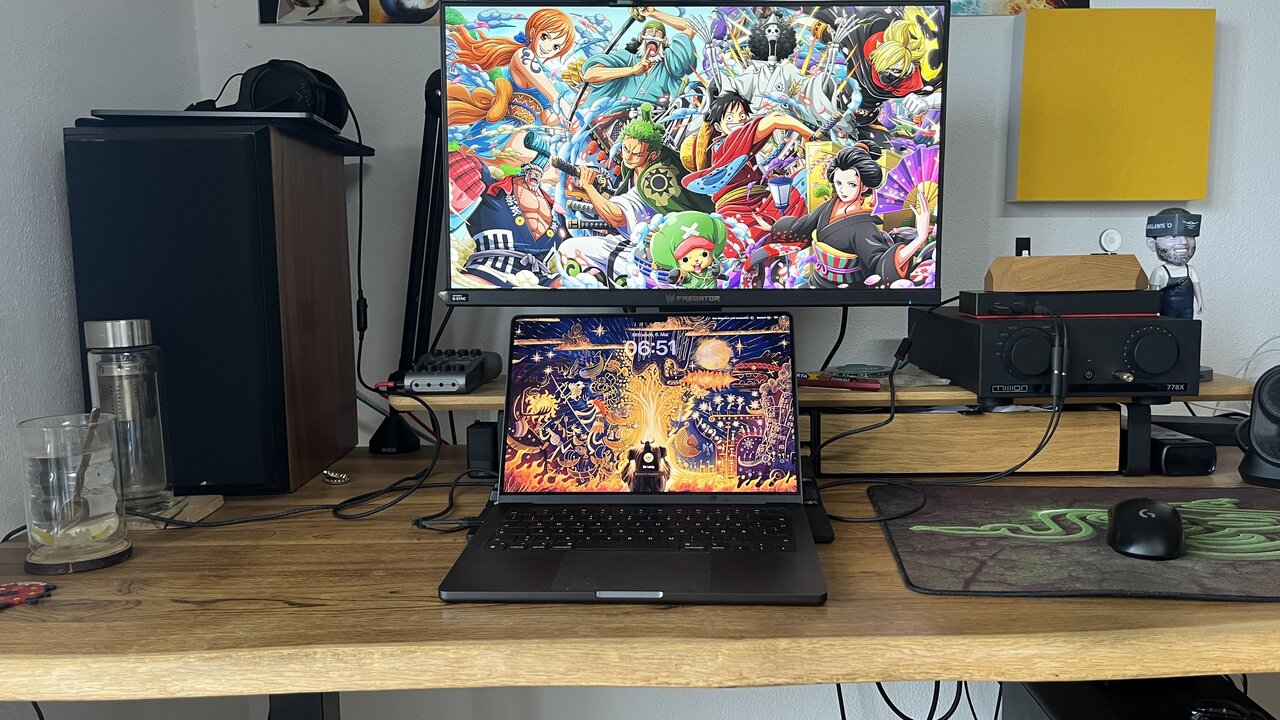
What does your desk look like?
Do you have a passion that wouldn't be obvious from your resume?
Anyone who’s ever been in a workshop or training session with me may have noticed the two surfboards hanging on the wall behind me. Here’s a little hint: they’re not just there for decoration.
It took a mere seven years for me to finally dare to hit the waves, but ever since then, it’s been the best way for me to clear my head and lose track of time.

What inspires you?
Mature personalities. People who lead by example and don't take themselves too seriously. To me, true greatness means not only showcasing your strengths but also owning your mistakes.
How do you measure your personal success?
I’ve adopted a simple definition of success: Set a goal and work toward it. This makes success much more tangible to me. It can be something small, like going for a swim in the evening and coming home feeling relaxed. It can also be something bigger, like finding a job that genuinely feels like the right place to be. That’s exactly how I feel at Zammad.
What career tips do you have?
Try new things! Only you can truly know what works for you.
What do you miss from your previous job?
What I miss most is the long-term support I used to provide to people. In my previous job, I was able to watch over several months as people switching careers developed their skills and gained confidence.
The flexibility was also different. At Zammad, we have flexible working hours. However, as a consultant, I often align my schedule with my clients' regular work hours.
What feature do you think is the coolest in Zammad?
Objects and core workflows. Both are powerful on their own, but when you combine them, you get that wonderful “aha” moment where 1 + 1 suddenly equals 11.
What’s your favorite Zammad anecdote?
There are lots of little Zammad moments, but my favorite comes from the consulting team. If we had a real office, there’d probably be a banner hanging above our door that said “Expectation Management.”
That may sound dry at first, but it describes our day-to-day pretty well. In workshops and training sessions, it’s not just about explaining features, but also about figuring out together what’s realistic, what makes sense, and how customers can get the most out of Zammad in their everyday work.
What do you do in your free time?
Reading books, cooking delicious meals, and playing board and computer games. Since I joined Zammad, I’ve also gotten into open-source and smart home projects. I guess the team’s enthusiasm for tech rubs off on me pretty quickly.
Volunteering is also an important part of how I spend my free time. I’m involved with Interessengemeinschaft München e.V., and I used to work as a bouldering coach for kids. Unfortunately, that no longer fits well with my workshop schedule. However, I didn’t want to stop working with children completely, so this year, I joined KidsCamp as a tent supervisor.
In recognition of this commitment, Zammad gives me an additional day off, and I add two more days myself. I appreciate that Zammad supports social engagement in this way. This allows me to make time for a project that matters to me.
And it was rewarding and humbling at the same time. After spending four days taking care of seven children, I left with a newfound respect for parents. I now have a much better understanding of true sleep deprivation.