
If it exists already, why create it again? In Zammad, you can simply import your databases with all your information on users and organizations with just one click. Here's how.
Managing Users via CSV Import
If your organization has information about customers (or personnel) already stored in a directory system that can export to CSV, you can batch-import them into Zammad in just three steps:
- Inspect the sample CSV
Check if your data is formatted correctly - Export your user data to CSV
- Import your CSV to Zammad
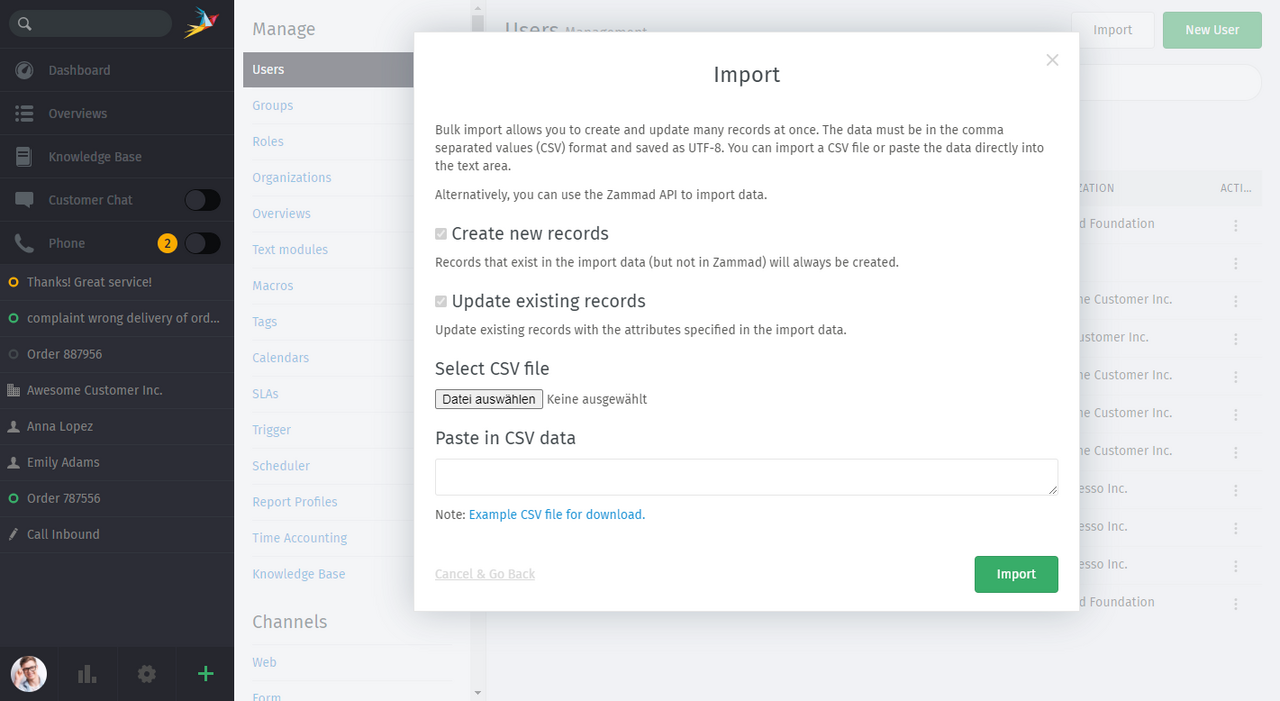
Existing records are updated whenever the imported data contains an email or login that matches an existing user account.
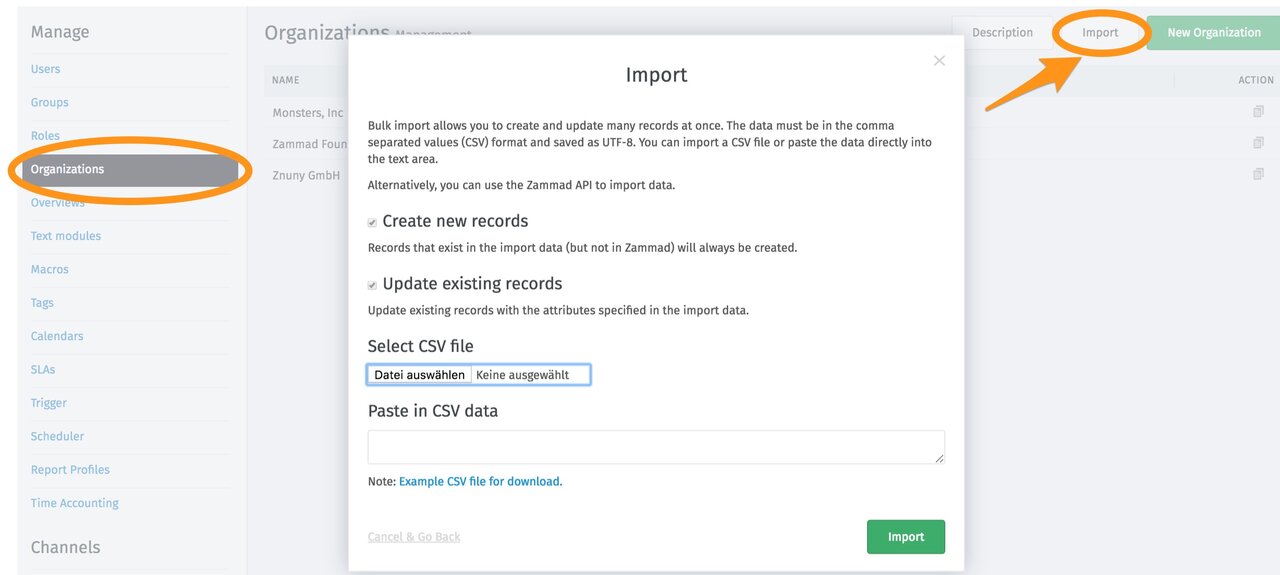
Import of Organizations via CSV File
With the import action (since Zammad 2.5) you can download a sample CSV file and upload your own CSV file.
To reduce the error rate of unwanted mass changes, a test import is carried out first and a summary appears at the end. If you agree with the summary, the CSV import will be executed.
So there you go! If you need extra info, you can find it in our Admin documentation.
One last note:
CSV import provides one-off batch processing of user records. For persistent, automated user synchronization, consider integration with a third-party directory system like LDAP / Active Directory or Exchange.